
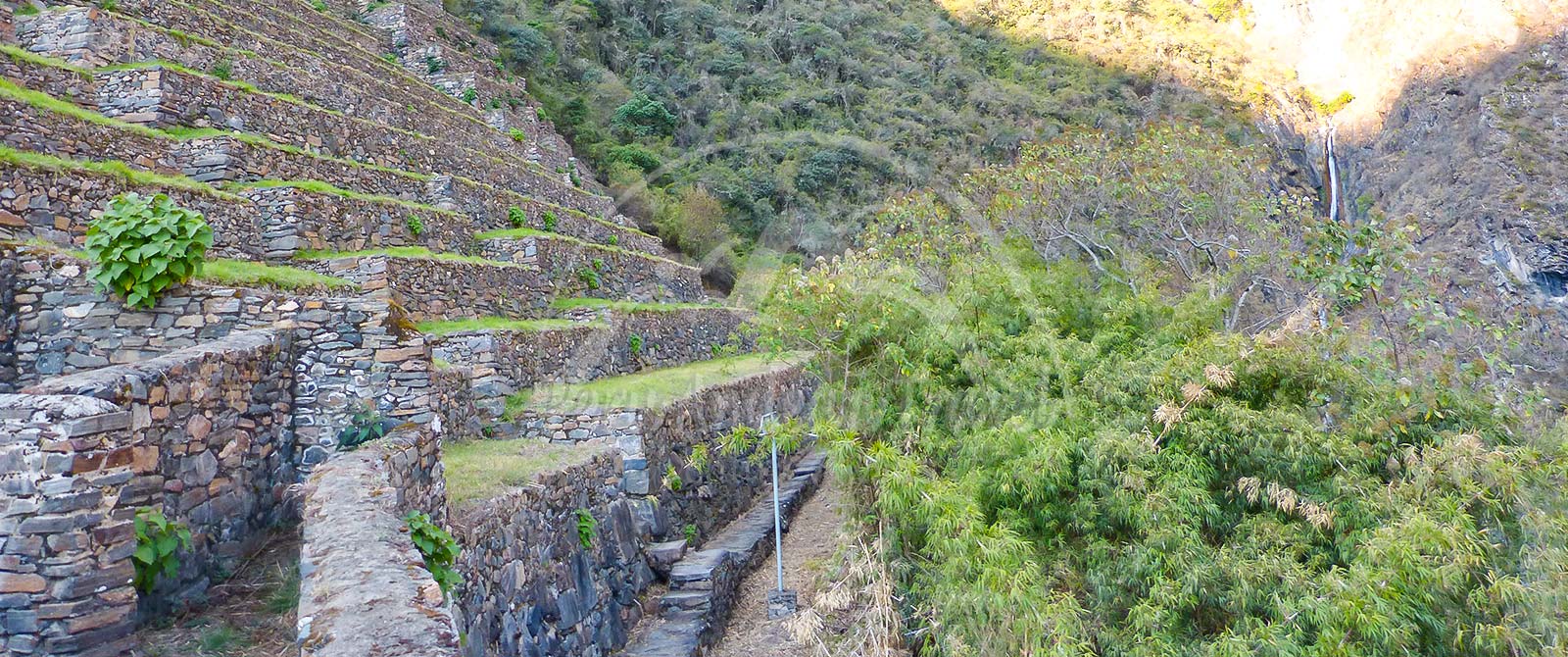
The flora of Choquequirao is part of a natural environment where humid forests, dry-area vegetation, shrubs, and high-altitude grasslands exist side by side. As the trail crosses different ecological zones, the landscape changes and reveals new forms of plant life that reflect the richness of the Andes and the mountain forests of Cusco.
When we think of Choquequirao, the first things that often come to mind are its impressive Inca buildings, agricultural terraces, and the mountains surrounding this remarkable archaeological site.
However, there is another treasure that deserves the attention of everyone exploring its trails: the extraordinary variety of plants found around the ancient Inca settlement and along the Choquequirao Trek.
For nature lovers, this hike offers the chance to discover much more than an archaeological destination. It also provides an opportunity to see how plants adapt to differences in temperature, humidity, altitude, and water availability.
Where Is Choquequirao Located and Why Is Its Flora Important?
Choquequirao is located in the department of Cusco, in southern Peru, within a mountainous region connected to the Vilcabamba mountain range and the Apurímac River Canyon.
The archaeological complex is part of an area with great historical and natural value. The Choquequirao Regional Conservation Area protects approximately 103,814 hectares of Andean, mountain, and seasonally dry ecosystems.
One of the main reasons for the area’s plant diversity is the wide range of altitudes and environmental conditions found here. Some areas have warmer temperatures and vegetation adapted to dry periods, while in other places, higher humidity encourages the growth of trees, ferns, mosses, and orchids.
This variety makes Choquequirao an interesting destination not only for travelers but also for people studying Peru’s biodiversity.
Ecosystems That Enrich the Flora of Choquequirao
One of the most interesting features of this region is the transition between different natural environments. Plant life changes as altitude, humidity, temperature, and exposure to sunlight vary.
Humid Mountain Forests
These environments provide favorable conditions for many plants, including orchids, ferns, mosses, and native trees. Humidity and shaded areas allow different layers of vegetation to develop, creating a rich and diverse forest landscape.
Seasonally Dry Forests
In certain areas, rainfall is not evenly distributed throughout the year. Plants growing in these environments have developed adaptations that help them survive periods when water is less available.
The vegetation in these forests is different from that found in humid environments, adding to the variety of natural habitats in the region.
Shrublands and High-Andean Grasslands
Other areas are dominated by shrubs, herbs, and grasses adapted to specific soil and climate conditions. These environments also play important ecological roles by protecting the ground and providing habitats for different species.
The presence of these ecosystems explains why a single trekking route can offer such different types of vegetation and scenery.
Main Plant Species Found in Choquequirao
The vegetation of this region is not made up of just one type of forest. Its composition changes according to the terrain, altitude, and climate conditions of each area.
1. Orchids: One of Choquequirao’s Botanical Treasures
Orchids are among the most attractive groups of plants in the region. Their flowers come in a wide variety of shapes, sizes, and colors, and many species have special relationships with insect pollinators.
In mountain forests, some orchids grow on tree trunks and branches, while others develop directly in the soil. These different growing habits allow them to take advantage of varying light and humidity conditions.
The diversity of this plant group is documented in the specialized publication Orchids of Choquequirao, prepared by researchers associated with the National University of San Antonio Abad of Cusco and the Field Museum.
During a hike, spotting a wild orchid can become one of the most memorable moments of the journey. However, the species that visitors may see depend on the season, habitat, and conditions along the trail.
2. Ferns: Plants of Humid Environments
Ferns add different shades of green to the landscape. Their leaves, known as fronds, can grow among rocks, on the forest floor, or in places protected from direct sunlight.
In areas with enough moisture, these plants find favorable conditions to grow. Their presence also adds to the forest’s structural diversity, creating small spaces where other organisms can find shelter.
During the Choquequirao Trek, it is worth paying attention to the vegetation growing in ravines and shaded sections of the trail.
3. Mosses and Lichens: Small Organisms with an Important Role
Although they often go unnoticed, mosses and lichens are important parts of the natural landscapes around Choquequirao.
Mosses usually grow on damp surfaces, rocks, and tree trunks, where they help retain moisture. Lichens, on the other hand, are associations between fungi and organisms capable of photosynthesis, such as algae or certain bacteria.
Both contribute to the diversity of small habitats and take part in ecological processes related to soil formation and nutrient cycling.
Looking closely at these organisms helps visitors discover that the natural richness of Choquequirao is not limited to trees and colorful flowers.
4. Native Trees of the Mountain Forests
Trees play essential roles in maintaining the balance of natural ecosystems. They provide shade, store carbon, help protect the soil, and offer food and shelter to many animals.
Among the plant species mentioned in official information about the Choquequirao Regional Conservation Area are Meliosma peytonii, Urera caracasana, and Guarea kunthiana.
These species show the diversity of native trees found in the region’s humid mountain environments and forests.
Trees also influence the forest’s microclimate. They control how much sunlight reaches the ground and help maintain moisture levels that support the growth of other plants.
5. Ichu and High-Andean Vegetation
In higher-altitude areas, where temperatures can drop considerably and winds can be strong, vegetation has different adaptations from those found in humid forests.
Ichu is a common name used for several types of high-Andean grasses that form part of the puna landscape. These plants can withstand demanding environmental conditions and are an important component of high-altitude ecosystems.
Their presence reminds us that the natural diversity of Choquequirao includes environments ranging from warm areas to landscapes typical of the high Andes.
How Does the Vegetation Change During the Choquequirao Trek?
The hike to Choquequirao is an excellent opportunity to observe how the landscape changes along the route. The vegetation found near the warmer areas of the canyon can be very different from the plants that grow in higher and more humid sections.
At lower elevations, some plants are adapted to greater exposure to sunlight and relatively dry conditions. As the terrain and humidity change, greener environments may appear, with more trees and plants typical of mountain forests.
Near the archaeological complex, vegetation blends with the mountains, terraces, and remains of Inca architecture, creating a landscape where nature and cultural heritage share the spotlight.
It is important to remember that not all trails have the same plant species or natural environments. The vegetation visitors encounter depends on the chosen route, the time of year, and local conditions.
What Is the Best Time to Observe the Flora of Choquequirao?
The chance of seeing particular plants depends on their growth and flowering cycles, as well as the weather conditions during each season.
During rainy periods, the landscape may look greener, with more abundant vegetation. However, rainfall can also make some trails slippery and make certain sections of the hike more difficult or dangerous.
During the drier months, trekking conditions may be more favorable along some sections of the route, although some plants change in appearance and activity.
If your main interest is seeing orchids or other wildflowers, it is a good idea to ask a local guide which species may be found along the trail and what conditions to expect during your visit. There is no single date that guarantees all plants will be in bloom.
Why Is It Important to Protect the Flora of Choquequirao?
Protecting vegetation is essential for maintaining the balance of natural ecosystems. Trees and other plants help protect the soil, take part in the water cycle, and provide food and shelter for many animal species.
However, these environments can be affected by wildfires, illegal plant collection, habitat fragmentation, and other activities that damage the natural surroundings.
Visitors can also help protect this environment through simple actions:
- Stay on authorized trails and avoid stepping on sensitive vegetation.
- Do not pick flowers, collect orchids, or remove wild plants.
- Do not leave rubbish along the trekking route.
- Avoid lighting campfires in unauthorized areas.
- Follow the instructions of local guides and conservation staff.
Visiting Choquequirao responsibly allows travelers to enjoy its natural richness without damaging the heritage that future generations deserve to experience.
Choquequirao: A Destination to Discover History and Nature
Choquequirao is much more than an ancient Inca city hidden among the mountains. It is also a region where changes in altitude, forests, and different microclimates create conditions for a remarkable variety of plant life.
From delicate orchids to native trees, ferns, and high-Andean vegetation, every plant group forms part of a landscape that deserves to be explored and protected.
For people who enjoy hiking, photography, and nature, the Choquequirao Trek offers an experience that combines adventure, history, and the opportunity to observe the natural surroundings.
aking a moment to admire a wildflower, notice changes in vegetation, or listen to the sounds of the forest reveals another side of this extraordinary destination in Cusco.
The next time you explore its trails, remember that every plant is part of a unique ecosystem. Learning about it and respecting it is one of the best ways to enjoy Choquequirao.